BIJOYGRAM Project
Dec-2013
Bijoygram is a documentary 1-channel video work portraying a community-based art project realised in Chittagong City, Southern Bangladesh. In the project, artists JP Kaljonen (FI/BD) and Abu Naser Robii (BD) develop an annual cultural festival, which aims to connect and deepen interaction between the inhabitants of the middle-class Bijoy Nogor neighborhood and the nearby Gucchagram slum inhabited by landless people and environmental refugees from the Southern parts of Bangladesh. Even though the neighborhoods are located next to each other, vast social differences keep the inhabitants of the two areas segregated, preventing them from developing the area together, which would benefit both of the parties due to natural disasters and political restlessness in the area. The artwork has been realised in the Floating Peers 2013 project coordinated by Kaljonen and Robii. In the project, 37 artists from different countries made socially engaged art projects together with the Gucchagram slum inhabitants. More information: Porapara Space for Artists http://www.porapara.org/social-practi… Artists´Association MUU http://www.muu.fi/site/?p=8220&lang=en Duration: 10 min Year: 2014 Image ratio: 16:9 Initiated by: JP Kaljonen & Abu Naser Robii
BEHIND THE BLACKBOARD
2015–2017
Overview
Behind the Blackboard is a socially engaged art and education project developed for young people aged 12–16 in schools across different countries. Through workshops lasting one to three months, the project created a creative space where students could reimagine their surroundings, investigate challenges within their school communities, and turn their ideas into practical action through artistic and activist methods.
The project encouraged students to think critically about their environment while also giving them tools to research, discuss, and respond to real issues affecting their daily lives. In many cases, participants documented the workshop process on video, which was later edited into documentary films. These films became part of the project’s broader educational and artistic output.
Project Implementation
The project has been implemented in the following schools and countries:
- Helsinki City Kaisaniemi Primary School, Finland, 2015.
- Helsinki City Keinutie Primary School, Finland, 2015.
- Ambition Ideal School & College, Chattogram, Bangladesh, 2016.
- Shree Rajeshwori Higher Secondary School, Sipapokhare, Sindhupalchowk, Nepal, 2017.
- Dibya Joyti English Medium School, Bungamati, Lalitpur, Nepal, 2017.
Each version of the project was adapted to local needs and conditions, allowing the students’ own realities to guide the artistic process and the final outcomes.
Method and Process
The workshops combined observation, discussion, creative production, and public intervention. Students first studied and analysed problems within their school communities. They then developed ideas for solutions and put them into practice through collaborative artistic and activist work.
In some cases, the process included participatory video, allowing students to document their own experiences and reflect on the project from within. These videos were later shaped into documentaries that preserved both the process and the outcomes of the workshops.
The project’s strength lies in its ability to connect learning with action. Rather than treating students as passive recipients of knowledge, it gives them a meaningful role in identifying problems, creating responses, and influencing their immediate school environment.
Examples of Student Action
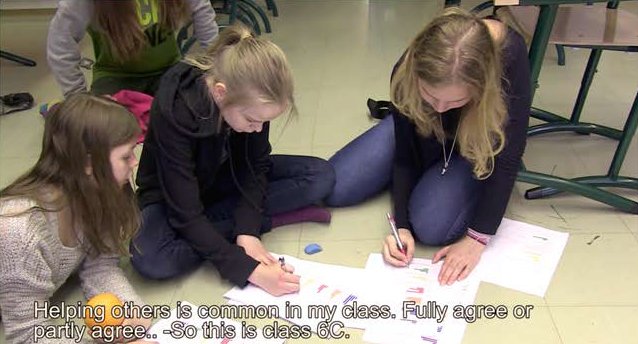
In Keinutie Primary School in Helsinki, students used participatory video to address conflicts within their class community. On May Day, they launched an awareness campaign by distributing one thousand balloons printed with messages about the school’s problems. The intervention took place both inside the school and at the busy Helsinki University metro station, extending the project into public space and engaging a wider audience.
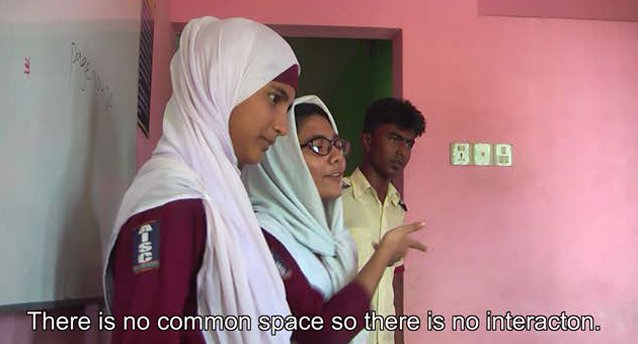
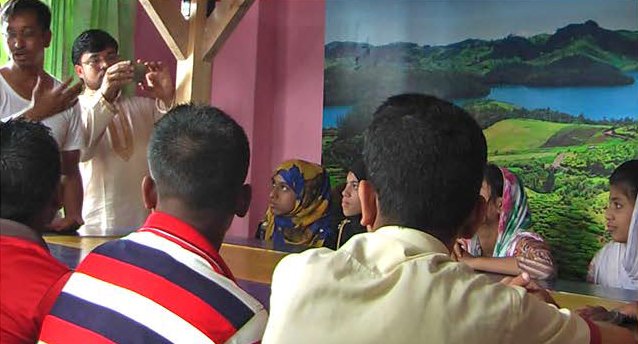
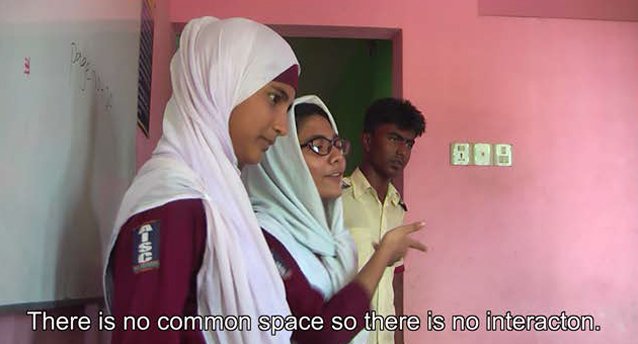
In Ambition Ideal School & College in Bangladesh, students responded to a lack of communication among peers by creating a social space that also functioned as a library. The initiative became both a physical meeting place and a symbolic response to the need for connection and shared learning.
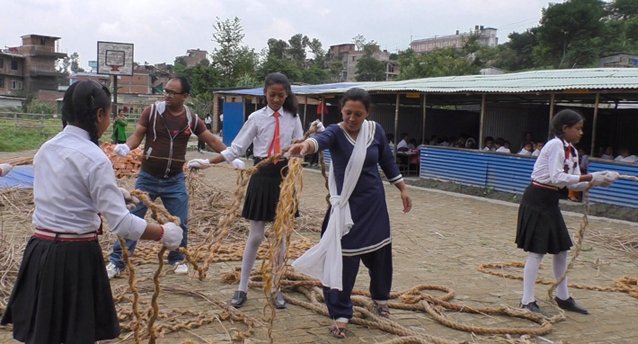
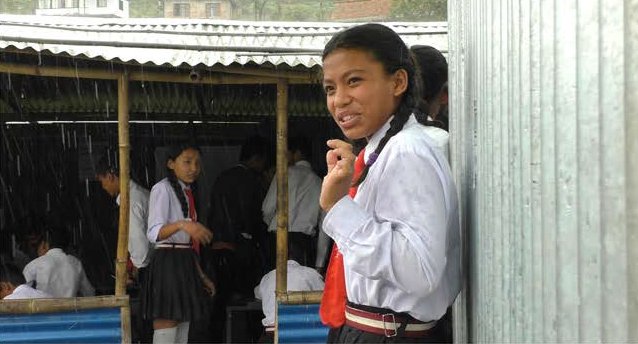
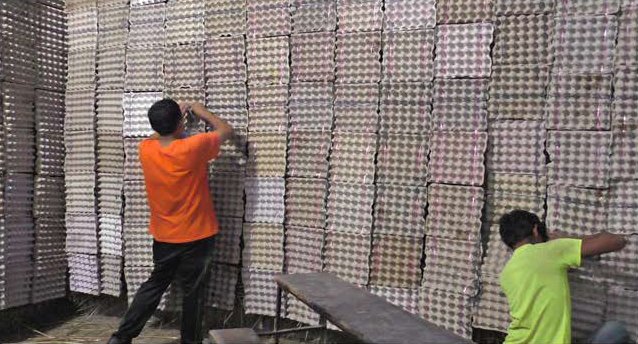
At Dibya Joyti English Medium School in Nepal, students faced difficulty hearing lessons because of poor soundproofing in their temporary shelter school, which had been built after the original structure was destroyed in an earthquake. To solve this, the students designed and constructed soundproofing using local materials, improving the acoustics of their classroom in a practical and locally appropriate way.
Work Information
Title: Behind the Blackboard
Artists / Collaborators: JP Kaljonen; Lauri Ståhlberg (Behind the Blackboard Helsinki); JP Kaljonen; Abu Naser Robii (Behind the Blackboard Chattogram); JP Kaljonen; Abu Naser Robii; Rabin Maharjan; Muna Bhadel (Behind the Blackboard Sipapokhare & Bungamati, production: Rebuilding Recaptured project)
Type: Socially engaged project
Format: 3 x 1-channel video installations
Duration: 30 min
Aspect Ratio: 16:9
Format: HD
Countries: Finland, Bangladesh, Nepal
Years: 2015–2017
Educational Value
Behind the Blackboard demonstrates how socially engaged art can support education, participation, and problem-solving in meaningful ways. By encouraging students to investigate their own school communities, the project helps them develop confidence, collaboration skills, critical thinking, and a stronger sense of agency.
It also shows how art can function as a tool for communication and transformation, especially when connected to real-life issues faced by young people. The project offers a valuable model for schools, educators, and cultural practitioners interested in creative learning, participatory methods, and socially responsive practice.
Rebuilding Recaptured
Work Information
Coordinators: Ashmina Ranjit (South Asia, Nepal), Narayan Rokka (Sipapokhare), JP Kaljonen (Finland)
Production: Lasanaa / Nexus (Nepal) and University of Arts Helsinki / Academy of Fine Arts (Finland), in collaboration with Porapara Space for Artists (Bangladesh)
Artists: Abhishekh Shah, Abu Naser Robii, Amritah Sen, Deepti Sherchan, Hemmo Siponen, Hira Bijuli Nepali, Kunjan Tamang, Keshab Raj Khanal, Malashree Suvedi, Moona Pennanen, Muna Bhadel, Muna Gurung, Prakash Ranjit, Rabin Maharjan, Rabita Kisi, Shrawan Maharjan, Yajyu Manandhar
Type: Socially engaged project
Location: Nepal
Year: 2017
Rebuilding Recaptured
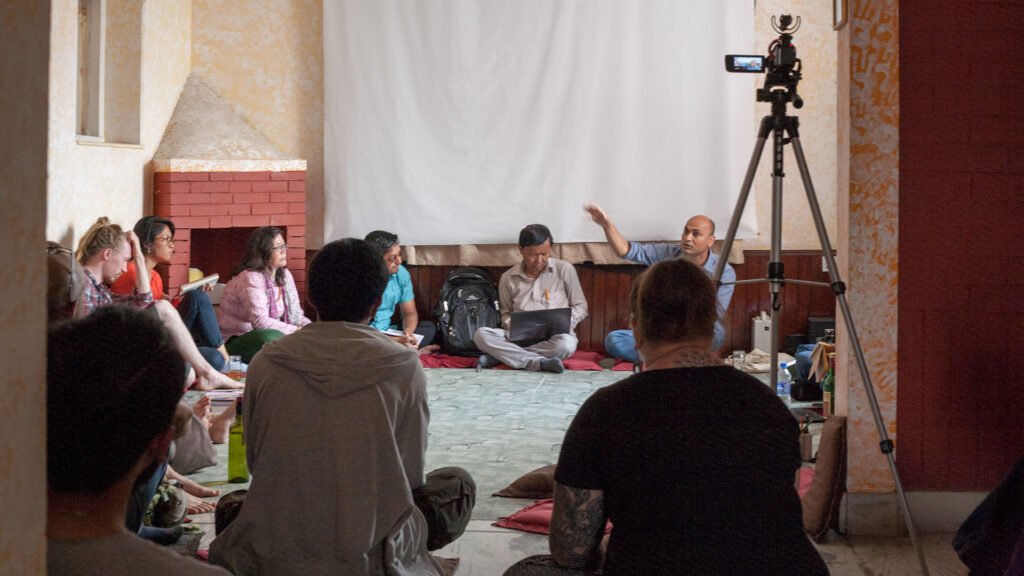
Rebuilding Recaptured was a socially engaged project that brought together 18 artists, writers, and researchers from Bangladesh, Finland, India, and Nepal to contribute imaginatively and collaboratively to the rebuilding process following the 2015 earthquakes in Nepal.
The project was developed through a workshop format divided into two interconnected phases. The first phase took place at Nexus Culture Nepal in Kathmandu and included site visits, lectures, artist talks, and collaborative workshops. These activities focused on developing artistic approaches to rebuilding while building dialogue and exchange among the participants.
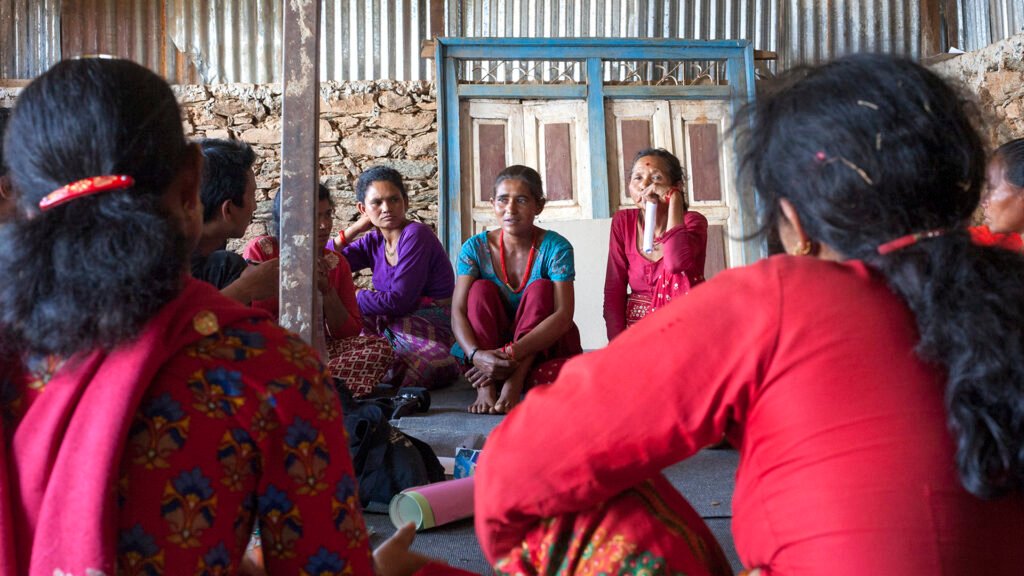
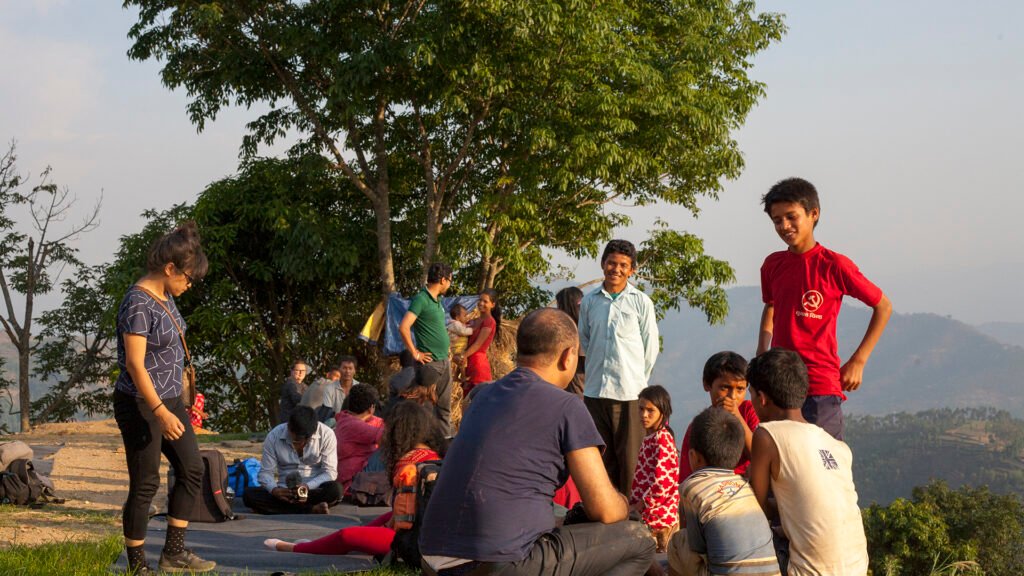
The second phase moved beyond the workshop space and into local communities affected by the earthquakes. Working with Dalit communities in Sindupalchowk and with young people in Bungamati and Lalitpur, the participating artists developed community-based projects with youth, mothers, children, and teachers. These interventions explored new ways of imagining post-earthquake life and opened possibilities for more hopeful futures.
The project produced a range of outcomes, from a mapping project in Sipapokhare in which residents re-envisioned their post-earthquake village, to practical and locally grounded solutions such as a soundproofing system created by school students using local materials for their temporary tin-shelter classroom.