The art of installation involves creating an intentional environment through the arrangement of objects and images in a specific space. Each installation is unique and tailored to the demands of the event, often designed to exist within a public space for a limited period.
As an installation artist, I have had the opportunity to create a variety of site-specific installations that have been displayed in public spaces. These installations have been intentionally designed to express a particular idea or concept, and I have found that the unique context of each location has helped to amplify the impact of my work.
Below, you will find a selection of my past installations, each of which represents a unique expression of my artistic vision and demonstrates the power of installation art to create immersive and thought-provoking experiences for viewers.
A Cross-Cultural Art Installation Inspired by Kazi Nazrul Islam\’s Epic Poem
Rebellious is an installation that reflects on the power and universality of Kazi Nazrul Islam\’s epic poem while exploring the cultural and political exchanges between Bangladesh and Jordan. The installation consists of a video and object art piece created by two artists, Rafiq Nasiruddin and Abu Naser robii, during an international art workshop in the village of Satana, near Amman, Jordan.
The installation is set in a room of a traditional house made of mud and stone, where the artists inserted various accessories that reflect the light and energy of the poem. The video projection features excerpts of the poem in its original Bengali language, followed by translations in English and Arabic. The objects in the installation include various elements such as traditional calligraphy, photographs of landscapes and cityscapes, and other symbolic objects that represent the cultural and political identity of Bangladesh and Jordan.
The installation is an outcome of a series of activities and discussions that took place during the 22-day art workshop. The artists explored the themes and ideas present in the poem while attempting to translate them into English and Arabic. They engaged in long discussions on various cultural and political issues relevant to both countries and their mutual interest and effort to understand and share was genuine.
Rebellious is an artistic attempt to exchange the cultural and political ideas of Jordan and Bangladesh through the powerful and attractive elements of rebel poetry. The installation aims to reflect on human existence and the power of poetry to awaken any person from within. It seeks to bring together people from different languages, cultures, and backgrounds to engage in meaningful dialogues and exchange of ideas through art.
A Cross-Cultural Art Installation Inspired by Kazi Nazrul Islam\’s Epic Poem
Rebellious is an installation that reflects on the power and universality of Kazi Nazrul Islam\’s epic poem while exploring the cultural and political exchanges between Bangladesh and Jordan. The installation consists of a video and object art piece created by two artists, Rafiq Nasiruddin and Abu Naser robii, during an international art workshop in the village of Satana, near Amman, Jordan.
The installation is set in a room of a traditional house made of mud and stone, where the artists inserted various accessories that reflect the light and energy of the poem. The video projection features excerpts of the poem in its original Bengali language, followed by translations in English and Arabic. The objects in the installation include various elements such as traditional calligraphy, photographs of landscapes and cityscapes, and other symbolic objects that represent the cultural and political identity of Bangladesh and Jordan.
The installation is an outcome of a series of activities and discussions that took place during the 22-day art workshop. The artists explored the themes and ideas present in the poem while attempting to translate them into English and Arabic. They engaged in long discussions on various cultural and political issues relevant to both countries and their mutual interest and effort to understand and share was genuine.
Rebellious is an artistic attempt to exchange the cultural and political ideas of Jordan and Bangladesh through the powerful and attractive elements of rebel poetry. The installation aims to reflect on human existence and the power of poetry to awaken any person from within. It seeks to bring together people from different languages, cultures, and backgrounds to engage in meaningful dialogues and exchange of ideas through art.
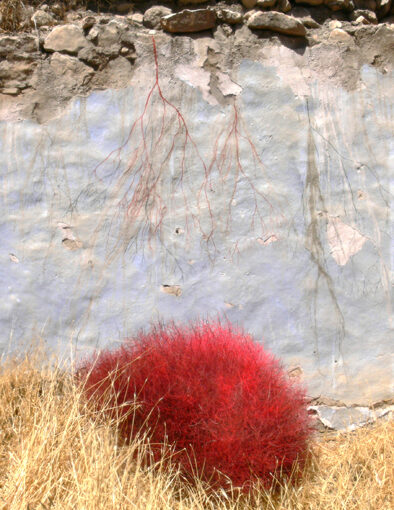
As an artist participating in the Satana International Artists Workshop-2008 in Jordan, I had the opportunity to visit the village of Shatana. The stark and colorless nature of the environment struck me immediately, with intense heat and dryness draining life from everything around me, including a small bush on the verge of death. This inspired my artistic project to focus on understanding the reality and way of life in Jordan, beyond my own perspective.
Throughout my residency, I worked on creating an installation in an abundant house located in the village of Shatana. My intention was to explore the relationship between nature and life in this region, showcasing the beauty that can be found even in such harsh conditions. Through immersing myself in this environment, I hoped to create a work that would highlight the resilience of the human spirit and the power of nature to inspire and sustain us, even in the most challenging circumstances.
Concept: The art installation and performance are a response to the artist\’s experience during their residency at the Uijae Artist Residency in Gwangju, South Korea. During their stay, the artist visited a historic building that was significant in the country\’s democratic uprising of May 18, 1980. This experience led the artist to reflect on the complexity of history and the subjective nature of its interpretation.
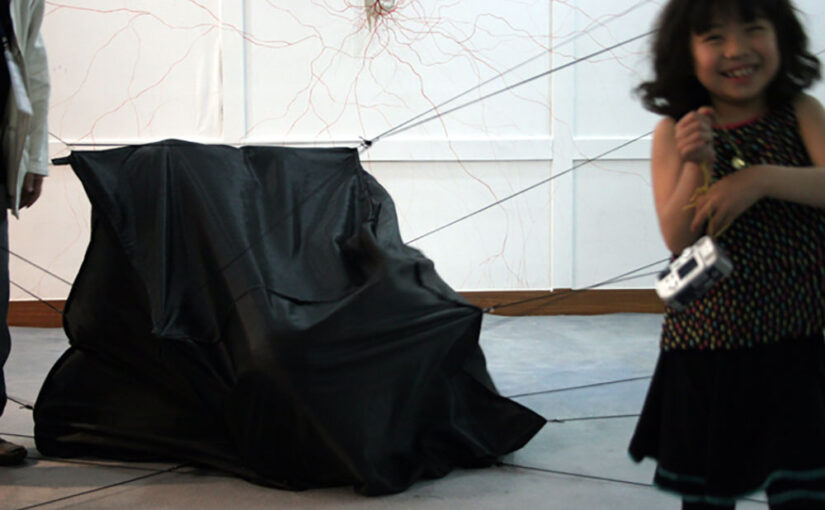
The installation consists of a network of red lines resembling the blood vessels of the human body, spreading out around bullet holes found in the designated rooms of the historic building. The lines represent the interconnectedness of people and the shared experiences of pain and sacrifice. The documentary on May 18 is projected on another wall of the room, highlighting the significance of the location and the event.
Performance: The performance lasts for 30-45 minutes and takes place in a black cloth box-like form placed in the middle of the exhibition room. The performance is set to the rhythm of the patriotic song of May 18, emphasizing the emotional and national significance of the event. The artist changes the forms within the box, creating a visual representation of the transformative nature of history.
Explanation: \”Let Me Know the History Behind the Story\” is an exploration of the subjective nature of history and the interconnectedness of people across time and place. Through the use of red lines, bullet holes, and performance, the artist invites the audience to reflect on the complexity of history and the human experiences that shape it. The performance emphasizes the emotional impact of historical events, reminding us that we are all connected by our shared humanity.
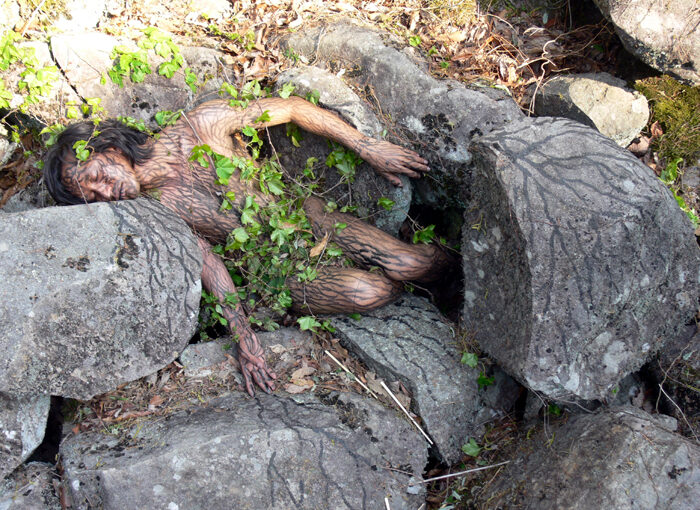
During my artist residency experience in Mudungsun Mountain, Gungju city, South Korea, I had the opportunity to explore the connection between prayer, mountain climbing, and happiness. After a harsh winter, I was struck by the beauty of the new leaves and colorful wildflowers that had emerged and felt extremely happy after each visit. However, this also led me to question why I and many others enjoy climbing mountains. I observed that people of all ages visit mountains in their free time and that many Buddhist temples are situated on mountaintops.
Drawing from my own experiences with Muslim prayer systems and scientific meditation in university, I researched various established methods of meditation, the process of sexual orgasm, eastern and western classical music, traditional Korean music, and other phenomena of life that can make us happy. I found similarities in the physical and mental processes that lead to happiness and wondered if the physical act of performing an action is important to make us happy, how our mind gets involved with the process, and whether it needs to be distant from the body to feel happiness.
I visited the mountain and temple every day and was surprised by how the nature and process of climbing combined with me, leading me to experience some unusual moments that are not possible on plain land. I asked some artist friends to help me develop my project, and together we explored the effects of mountain climbing on the mind and body. Through our visits, we observed that the physical tiredness of climbing made a distance between the body and mind, while the expanding horizon line had an effect on our mind to open it up.
As we climbed the mountain with our friends, we found that our relationships changed after each visit and that we gained a deeper understanding of ourselves and our relationships. We wondered if the physical act of climbing and the consciousness of stepping helped fulfill the process of happiness. This exploration culminated in a prayer performance on Mudungsun Mountain, which we documented and presented in a gallery space to share our conceptual process with others.
Overall, my experience climbing Mudungsun Mountain led me to question the link between prayer and mountains, explore the mechanisms of climbing mountains, and question what makes us happy. Through this exploration, I gained a deeper understanding of the connections between physical and spiritual happiness, and the transformative experience that can result from the act of climbing a mountain.
During my three-month residency at Mudung Mountain Studio, I embarked on a new artistic project titled \”Searching for the missed mystery of Life and Happiness\”. The project aims to visually explore the relationship between nature, spirituality, and happiness, and understand the mechanisms that encourage people to be drawn to supernatural beings and phenomena.
To accomplish this, I plan to use a variety of creative visual practices, including live performance, video, photography, drawing, music, and painting with simplified installations. My focus will be on my thoughts and inner feelings about interpersonal and socio-life, as well as the crossroads of artistic practice, personal expression, experimentation, and risk points.
The project\’s catalyst note is a passage by Khalil Gibran about prayer, which has guided my exploration of the connection between prayer, nature, and happiness. My goal is to create a conceptual world that will serve a new epoch and to present my work in a way that is easy and communicative to non-artist audiences.
Through this project, I hope to provoke reflection and exchanges around the process of creation, form a notion of sculpture as a live presence, and occupy space for a fragment of time. It will be an immersive experience that takes the audience on a journey through the unknown, encouraging them to approach sculpture through installation and performance, feel sensations, and listen to movement.
Ultimately, the primary objective of this project is to uncover the mysteries of life and happiness and present them through the visual arts.
\”Leaf and Life\” was a performance and installation project showcased during the Open Studio Day exhibition of Santua Art Foundation\’s World Environment Day 2005 event, held at the bank of Karnaphuli River in Patenga. The project aimed to explore the spontaneous creative process of nature, seasons, organic objects, and human feelings through the life cycle of a leaf. The project was designed to be an immersive experience, allowing the audience to interact with nature and art simultaneously.
The project was staged in a natural environment, allowing the audience to witness the interaction between nature and art. The installations were designed to represent different stages of the leaf\’s life cycle, with the first installation featuring fresh, green leaves symbolizing the energy and hope of spring. The audience was encouraged to touch and interact with the leaves to evoke a sense of connection with nature.
The installations progressed, and the leaves gradually turned yellow and brown, symbolizing the natural process of aging and decay. The audience witnessed the leaves falling from the trees, a reminder of the impermanence of life.
The final installation featured dry, dead leaves, representing the negative aspects of life, such as loss and mortality. However, even in death, the leaves were transformed into something new, as they decomposed and nourished the soil, enabling new life to grow.
Throughout the project, the audience was invited to reflect on their own personal experiences and knowledge about life, as they witnessed the transformation of the leaves. The project aimed to evoke a sense of awe and wonder at the beauty and complexity of nature, while also reminding us of the importance of living in the present moment and cherishing the preciousness of life.
Overall, \”Leaf and Life\” was a multi-sensory and immersive art project that brought together nature, seasons, organic objects, and human feelings, creating a unique and thought-provoking experience for the audience. The project successfully demonstrated the power of art in connecting people with nature and highlighting the importance of environmental conservation.
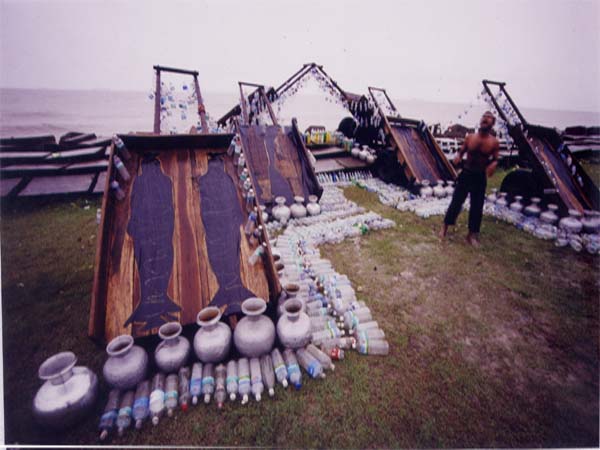
As an artist, I have always been interested in creating art that brings about social change and awareness. On June 5th, 2005, I organized a solo installation art show at Patenga beach in support of the World Environment Day activities of Porapara Space for Artists.
The installation aimed to highlight the freshwater crisis and the dire situation of water pollution in the area. Through a series of social practice art activities, I engaged with the local community to create awareness and stimulate discussion on these pressing issues.
My approach involved leaving empty water jugs in some houses in the local market, creating curiosity, and engaging people in a discussion about fresh water and water pollution. The response was overwhelming, and many local people participated in the activity by offering their help to transport the materials to Patenga beach, which was around 5 miles away.
With the help of the local community, I collected almost all the materials for my installation and created a live performance piece that was witnessed by tourists, locals, and fellow artists. Despite the hostile weather and heavy rain, the performance was a success, and many members of our community became a family.
Through this social practice art activity, I aimed to create a space for dialogue and awareness about the environment and the impact of human activity on the planet. By engaging with the local community and involving them in the activity, I hoped to create a sense of shared responsibility and encourage positive action toward a better future for performance.
in this event local cultural Organization \”Amra Palash\” Drama artists Sohidul Islam Mithu and Ekramuk Hauque participate in the performance action. Mazharul Alam Titumir, Anwar Jamal, Harun Mehedi, Hanif Uddin Talikdar, Musa Alam Masud, and many other local friends help to make the event successful.
As an artist participating at the beginning of the Porapara Space for Artists, I had the privilege of taking part in an art workshop led by the talented artist Mahbubur Rahman. The workshop was titled \”Animated Sculpture\” and aimed to explore the possibility of creating a visual language by combining mechanical ideas with sculptural forms.
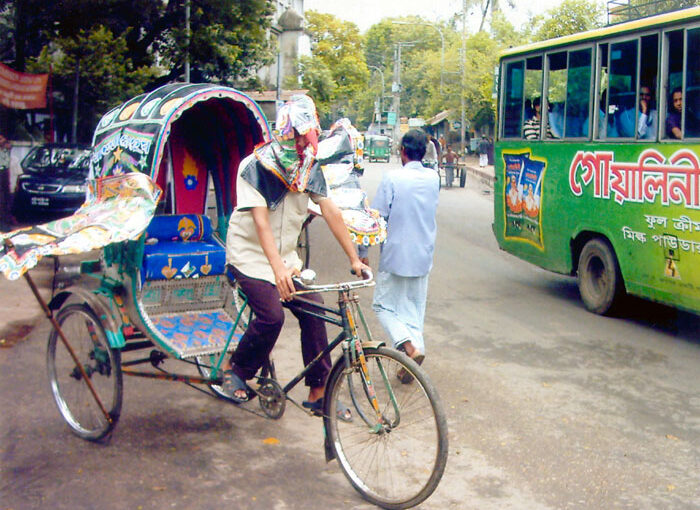
During the workshop, I connected wings to a rickshaw in a way that allowed it to move like a bird flapping its wings when the rickshaw was in motion. I also fashioned a hat for myself out of the rickshaw hood. In a surreal live performance, I attempted to drive the rickshaw down the street in front of Alliance Frances in Chittagong while an exhibition of our artwork was on display inside the venue.
Through this work, I sought to express the hope of escaping the traffic congestion that plagues our cities. The rickshaw\’s transformation into a bird serves as a metaphor for this desire for freedom. The idea of an animated sculptor was also reflected in the attachment of wings to the installation, which added an element of movement and life to the work.
To make this performance work accessible to a wider audience, an installation of the piece is now on display in the gallery. Viewers can witness this surreal and thought-provoking work on a TV monitor, which captures the energy and dynamism of the original live performance.
I remember creating the \”The river\’s heart is on fire. \” installation, inspired by my experience at the Santaran Art Camp in Alikadam, Bandar Bon. The installation aimed to capture the contrast between the natural beauty of the area and the underlying fear that exists due to political tensions.
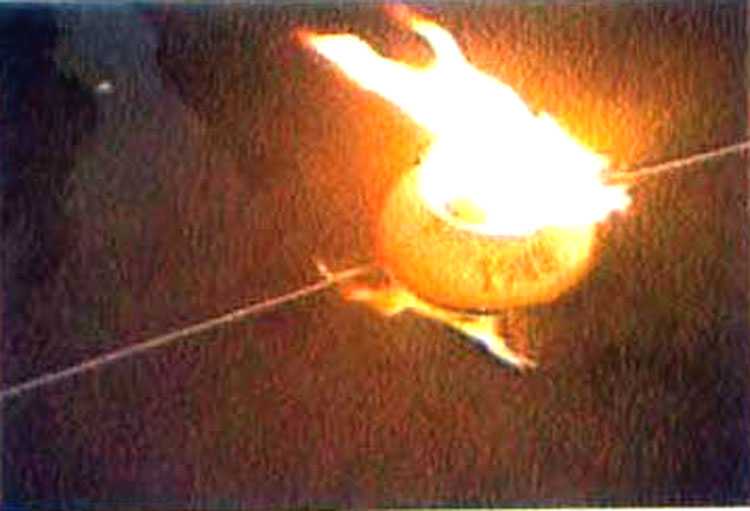
To create the installation, I set up a floating fire on the clear waters of the Matamuhuri River and made a garland of light on the way to cross the river in the evening. The garland was made by combining the river\’s current and clear water with an earthen bowl.
My experience at the Santaran Art Camp was a catalyst for the installation. Although I intended to concentrate on my studies for my MA exam preparation, I was invited to enter the camp and agreed under certain conditions. I used the opportunity to advance my studies and did not draw pictures in the camp.
After ten days, a day-long performance and installation activity centered around the Alikadam Bazar ghat of the Matamuhuri River began. Despite the stress from general Pahari, the Bengali leader\’s response, and the underlying fear in the area, many beautiful and serious artistic expressions were revealed at the end of the day.
Through the \”The river\’s heart is on fire.\” installation, I wanted to create a sense of contrast that would resonate with local hill Bengali walkers and encourage dialogue about the underlying fear that exists in the area. The combination of fire and water symbolizes the contrast between nature\’s beauty and the underlying fear that exists, and I hope that the installation sparks a meaningful conversation.
I remember creating the \”The river\’s heart is on fire. \” installation, inspired by my experience at the Santaran Art Camp in Alikadam, Bandar Bon. The installation aimed to capture the contrast between the natural beauty of the area and the underlying fear that exists due to political tensions.
To create the installation, I set up a floating fire on the clear waters of the Matamuhuri River and made a garland of light on the way to cross the river in the evening. The garland was made by combining the river\’s current and clear water with an earthen bowl.
My experience at the Santaran Art Camp was a catalyst for the installation. Although I intended to concentrate on my studies for my MA exam preparation, I was invited to enter the camp and agreed under certain conditions. I used the opportunity to advance my studies and did not draw pictures in the camp.
After ten days, a day-long performance and installation activity centered around the Alikadam Bazar ghat of the Matamuhuri River began. Despite the stress from general Pahari, the Bengali leader\’s response, and the underlying fear in the area, many beautiful and serious artistic expressions were revealed at the end of the day.
Through the \”The river\’s heart is on fire.\” installation, I wanted to create a sense of contrast that would resonate with local hill Bengali walkers and encourage dialogue about the underlying fear that exists in the area. The combination of fire and water symbolizes the contrast between nature\’s beauty and the underlying fear that exists, and I hope that the installation sparks a meaningful conversation.