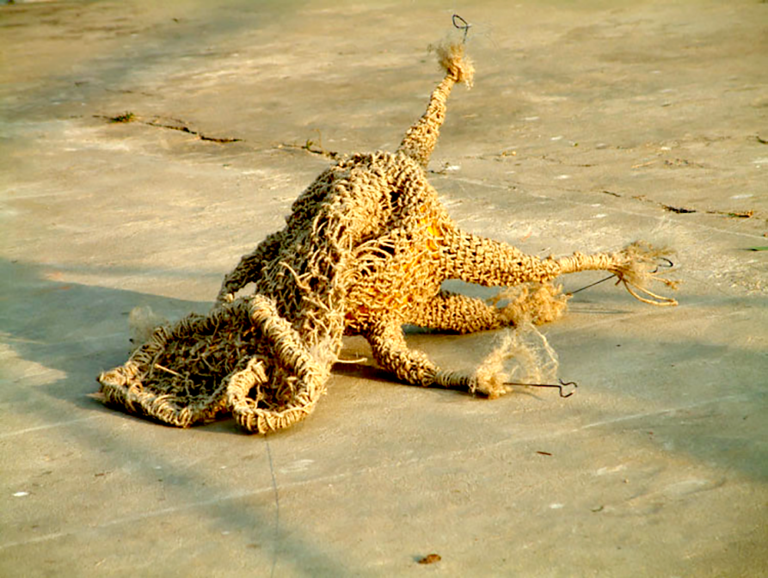
The three

As an artist participating in the international workshop held in Satna village, Jordan, I found myself drawn to the significance of the number three. From the day of my arrival, on my 33rd birthday, after overcoming visa-related obstacles, I traveled through three airports, carrying three pieces of luggage, for three different organizations. I was welcomed by Rafiq Naseeruddin, who drove me for three hours along a deserted road to the traditional mud and stone house where I would be staying with two other artists for the next 20 days.

During my time in Satna, the significance of the number three continued to manifest in various ways, including the arrival of three more artists, one of whom was from Italy and had come from Egypt. The idea of the number three stayed with me and eventually found expression in a performance piece involving knitting.

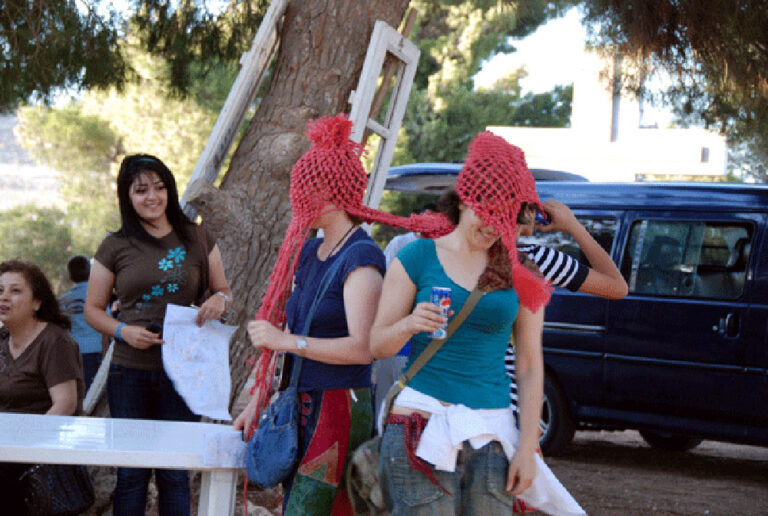
On the last day of the workshop, I invited the audience to participate in the performance by wearing a three-headed knitted hat. The hat symbolized the challenges and dangers of moving forward when pulled in three different directions. The audience had fun with the unusual hat, but also experienced the discomfort of its design, emphasizing the importance of balance and unity in the face of challenges. The workshop was supported by Triangle Arts Trust UK, and the experience gave me a new appreciation for the power of numbers and their influence on our perceptions and experiences

Continue reading The three

কিসের পিছে ছুটছ তুমি, একি তোমার পথ?

চট্টগ্রাম বিশ্ববিদ্যালয়ের চারুকলায় পড়তে যাওয়ার সুবাদে পথে যে বাসের সিটে বসে থাকার বাদ্যতামূলক পরিস্থিতির ভিতর দিয়ে যেতে হল তাঁর ও অনেক সুফল বা পজিটিভ অভিজ্ঞতা আছে, আছে ঢের বেশী খারাপ অভিজ্ঞতা। এইসব অভিজ্ঞতার বিস্তারিত এখন আর মনে করা মুশকিল, সেই পরিচ্ছন্ন স্মৃতি শক্তি আমার কোন কালেই ছিল না। তবে কিছু কিছু ঘটনা একেবারেই ভোলার মতন না। যেমন একদিন বাড়ি ফিরে পুকুরে সাতার দিলাম রাত ৯টার দিকে, উঠে খেয়ে কিছক্ষন বিশ্রাম করে পড়াশুনা করলাম ঘন্টা খানিক। পরে ঘুমানোর আয়োজন করে নামাজ ও ধ্যান করলাম আরো ঘন্টা খানিক। পরে ঘুমিয়ে পড়লাম। রাতে স্বপ্ন দেখলাম প্রধানমন্ত্রী শেখহাসিনা চট্টগ্রাম আসছেন, কোথায় যেন বড় মিটিং, সারা রাস্তা বঙ্গবন্ধুর ছবিতে সয়লাব। সকালে তাড়াহুড়োকরে বিশ্ববিদ্যালয় রওনা হয়েছি আর রাস্তায় এই সাজ সাজ রব দেখতে পাচ্ছি। বাসের লোকজন কেমন জানি ফিস ফিস করছে। কেউ আওয়াজ করে কথা বলছে না, পরে কৌতুহল বেড়ে গেল আমার, কি হয়েছে? জিজ্ঞাসার উত্তরে একজন জানালো শেখ হাসিনার আগমনের এই সুজোগে কেউ তাঁর গাড়ি বহরে হামলা করেছে, তাই শহরে মারামারি লেগে গেছে। পরে আমার বেশী ভোরে ঘুম ভেঙ্গে গেলে এই স্বপ্ন আর দীর্ঘায়ীত হয় নি। কিন্তু স্বপ্নের ঘোর লেগেছিল মাথায়। সকালের টিউশনি সেরে প্রতিদিনের মতই ১৫ নম্বর স্টেশন থেকে বাসে চড়ে বসেছি, ১৫নম্বর ঘাটে বাস এসে দাঁড়িয়ে যাত্রী উঠানোর হাঁকডাক দিচ্ছে, কেউ উঠছে, বসে থাকা যাত্রীরা তাড়া দিচ্ছে ছেড়ে যাবার জন্যে, আমি জানলা দিয়ে বাইরে তাকিয়ে আছি। নানান কিছু দেখতে দেখতে একসময় দেখলাম এক চা দোকানের গেটের সামনে পাকা জায়গায় এক লোক পরিষ্কার সাদা কপড় পড়ে শুয়ে আছে, নিস্তেজ। এর মধ্যেই আরেক লোক বাস কন্ডাক্তার কে অনুরোধ করছেন, এক ব্যক্তি অসুস্থ হয়ে পড়েছেন বাড়ি মীরেরসরাই, তাঁকে বাসে তুলে দিলে যাতে একটু ধরে বাস থেকে বিশ্বরোডের মাথায় নামিয়ে দেয়। উনার সাথে যাবার মত কেউ নেয়, কিন্তু ওখানে গেলে উনার পাড়ার লোকজন উনাকে বাড়ি যেতে সহায়তা করবেন। কথা গুলো আমার কানে আসছিল আর আমি শুয়ে থাকা লোকটার মুখে উপর পড়া ভোরের আলো দেখছিলাম।এই ভোরের আলোয় কিসুন্দর মানুষের মুখ । কিন্তু হঠাত মনে হল এই লোকটির কথাই বলছে কেউ একজন, যে অসুস্থ হয়ে পড়েছে, যাকে বাসে উঠিয়ে দিতে চাইছে ঘাটের লোকজন, কিন্তু কেউ নাই যে উনার সাথে যাবে। পরে বাস উনার অবস্থা দেখে নিতে সম্মত হয় নি, ছেড়ে যাবার আগ মুহুর্থে আমার মনে হল আমি তো একই পথে যাচ্ছি, আমার হাতে যা সময় আছে তাতে আমি উনাকে নামিয়ে দিয়ে ট্রেন ধরতে অসুবিধা হবে না, বাস থামিয়ে আমি সাথে সাথে নেমে পড়ি। অসুস্থ লোকটার সাথে থাকা সহকর্মী মাঝিদের বললাম আমি তো ভার্সিটি যাচ্ছি, উনাকে টেম্পুতে তুলে দেন, আমি উনার সাথে যাব, এবং বিশ্বরোড পর্যন্ত যেতে সাথে থাকব। সবাই দেরি না করে লোকটাকে টেম্পুতে তুলে দিল, আমি পাশে বসে ধরে রাখলাম। বিশ্ব রোড পর্যন্ত যেতে যেতে কত কথা মাথায় আসল, অনেক বার চেষ্টা করলাম উনার সাথে কথা বলতে, কিন্তু উনি সোজা হয়ে বসেই থাকতে পাড়ছেন না। আমাকে ধরে থাকতে হল সারা পথ, কোন কথা বললেন না। বিশ্বরোড এর মুখে পৌঁছে নামাতে গিয়ে ঘটল বিপত্তি, উনার শরীর নাড়াতে পাড়ছেন না, এক পাশ অবশ হয়ে পড়েছে। আমি উনার ওজন সামলাতে পাড়লাম না, পড়ে যাচ্ছিল নিচে, এক রিকশাওয়ালা এসে ধরল, উনার অবস্থা দেখে মনে হল এই ভাবে রাস্তায় রেখে গেলে উনি আরো বিপদে পড়বেন, দরকার হাস্পাতালে যাওয়া। তবুও রিকশাওয়ালার পরামর্শে ফকির হাটের এক ডাক্তারখানায় নিলাম লোকটাকে ওই রিকশায় বসিয়েই। ডাক্তার বললেন দেরি হয়ে গেছে, দ্রুত চট্টগ্রাম মেডিকেল কলেজ হাস্পাতালে নিতে হবে, উনার স্ট্রোক হয়েছে। এই পরিস্থিতিতে উনাকে হাস্পাতাল নিতেই হবে দ্রুত। পকেটে নিয়মিত ভার্সিট যাবার টাকা ৪৫ টাকার বেশী এক টাকা ও নাই। লোকটার পকেটে পেলাম ২৪০ টাকার মত, একটা বেবিট্যাক্সি ঠিক করে ঐ রিকশাওয়ালা সহ ধরে উনাকে টেক্সিতে চড়িয়ে গেলাম হাস্পাতালে। সেখানে নিয়েও ঝামেলা ইমার্জেন্সি উনাকে ভর্তি নিতে চাইছেন না। অনেক রাগারাগি করে, অনুরোধ করে শেষ পর্যন্ত ভর্তি নিলেন। এবার আমার মাথায় আসল উনার আত্বীয় স্বজনদের খবর দিতে হবে, উনার কাছে অনেক কষ্টে বারইয়ার হাটের দোকান মালিক উনার চোটভাই এর নাম ঠিকানা পাওয়া গেল, আমার কাছে যা টাকা আছে তাতে আমি শুধু ওইখানে যেত পাড়ব, কিন্তু ফিরার গাড়ি ভাড়া হবে না। দুপুরে খাবার টাকা ও হবে না। কিন্তু এখন এই অসুস্থ লোকটাকে এখানে রেখে ক্লাসেও যেতে পারছি না। শেষে রওনা হলাম আল্লাহ ভরসা করে। মনে মনে ঠিক করলাম যদি বিপদে পড়ি তবে সদরমার দিঘী বাড়ইয়ার হাট থেকে অল্প দূরে, হেঁটে মামা বাড়ি চলে যাব। একটা ব্যবস্থা হবে নিশ্চয়ই। কিন্তু সেই মামা বাড়িতে আমি যখন শেষ বার গিয়েছিলাম তখন আমি মাত্র ক্লাস সিক্স এ পড়ি, তবে স্মৃতি আছে অনেক,মনে হচ্ছিল আমি ঠিক পৌছুতে পারব। শেষে বারইয়ার হাট পৌছুলাম, খবর ও দিলাম । লোকটার ভাইয়ের আচরনে ভীষণ মন খারাপ হল। মনে হল আমি এতদূর এই খবর বলতে এসে এক মস্ত অপরাধ করে ফেলেছি। আমি যা বলতে এসেছি তা সত্যি নয়, উনি আশপাশের দোকানের লোক জড়ো করে ফেললেন, আমি লোকেদের পরিস্থিতি বুঝিয়ে বললাম, অনেকেই ব্যপারটা বুঝলেন কিন্তু উনার ভাই অনেক খারাপ ব্যবহার করলেন, বলতে চাইলেন আমি মিথ্যা বলে উনাকে ফাসানোর জন্যে কোন ফাঁদ পেতে এই খবর দিয়ে উনাকে চট্টগ্রাম নেবার চেষ্টা করছি। আমি অবাক হলাম এবং দুঃখ পেলাম। এই সব হাঙ্গামা শেষ হতে হতে বিকেল ৩ তা বেজে গেল, ভীষণ ক্ষুদার্ত আমি, পকেটে আছে ৯ টাকা, ফিরব কি করে পতেঙ্গায়? এদিকে খেতে না পাড়লে মনে হচ্ছে আর দাঁড়িয়ে থাকতে পাড়ব না। মাথা ঝিম ঝিম করছে। একটা ভাত ঘরে ঢুকে পড়লাম, হাত মুখ ধুয়ে টেবিলে বসলে একপ্লেট ভাত সাথে এক গোল্লা আলু ভর্তা, এক বাটি ডাল দিয়ে গেল বয় ছেলে। জিজ্ঞেস করল কি খাব তরকারী, উল্টে আমি জিজ্ঞেস করলাম ভাত আলুভর্তা ডাল কত, বল্ল সাত টাকা। বললাম আমার আর কিছু লাগবে না, চটপট আলূ ভর্তা ডাল দিয়ে খেয়ে ৭ টাকা বিল দিয়ে বেড়িয়ে পরলাম। ২ টাকা আছে পকেটে এখনো। লোকাল বাসে ২ টাকা দিয়ে বারইয়ার হাট থেকে সদরমার দিঘী এসে নাম্লাম শূন্য পকেটে তখন চারটা সারেচারট বাজবে, বিকেলের আলোয় হেঁটে মামা বাড়ি খুঁজে বের করলাম, স্মৃতি কাজে লেগেছে। মামি তো আমাকে দেখে অবাক। পড়ে ঘটনা খুলে বললে উনি জোর করলেন রাতে থেকে যেতে, পরে বললাম বাড়িতে মা বাবা অনেক চিন্তায় পরে যাবেন, আমি তো এখানে আসার জন্যে রওনা হই নি, যাচ্ছিলাম ভার্সিটি কিন্তু পরিস্থিতির স্রোতে ভেসে আমি এখন মামা বাড়ি। যা হোক মামি ১০০ টাকা দিলেন, আমি দ্রুত বিদায় নিলাম। পতেঙ্গা ফিরে কাঠগড়ে সুচয়নে নেমে কিছু কাজ সেরে বাড়ি পৌঁছলাম ঠিক ৯ টায়। বাড়িতে কেউ কিছু জানল না। কিন্তু আমি মনে মনে দিনের ক্লাস গুলির জন্যে চিন্তিত ছিলাম, অসুস্থ লোকটার ভাইয়ের অদ্ভুত আচরণের কারনেও মনটা বেশ খারাপ হয়ে ছিল। পুকুরে সাতার কেটে খেয়ে ধ্যান করে ঘুমিয়ে পড়লাম। পরের দিন একই রুটিনে বটতলী স্টেশনে এসে দেখি বন্ধুরা গতকাল এর ঘটনা নিয়ে বেশ টেন্স হয়ে আছে, ট্রেন ঠিক সময়ে ছাড়বে কিনা তা নিয়ে সংশয় সবার, কি হয়েছে জানতে চাইলাম। তারা বল্ল গতকাল অনেকেই বিশ্ববিদ্যালয়ে পৌছুতেই পাড়েনি। ট্রেন ফতেয়াবাদ পৌছার পরেই শুরু হয় মারামারি, বিশ্ববিদ্যাল পৌছার আগেই খোলা মাঠে ট্রেন থেকে নেমে ধান ক্ষেতের উপর দিয়ে পালিয়ে অনেক কষ্টে কাদা জল পেড়িয়ে সহপাটিরা হাঠহাজারী রোডে আসে। ট্রেন এম্বুশ করে ছাত্র শিবিরের আস্ত্রধারী ক্যডাররা বাস ফায়ার করেছে ট্রেনে। পড়ে যে যেভাবে পেড়েছে, বাসের ছাদে, ট্রাকে চরে শহরে পৌঁছেছে। আমি আর বলিনি আমি কি করেছি গতকাল সারা দিন। শূধু ডিপার্ট্মেন্টের সামনের জারুল তলায় পৌঁছে তিনটা ডিগবাজী দিয়েছিলাম সবুজ ঘাসের উপর, আমার সহপাঠীরা এতে বেশ অবাক হয়েছিল।

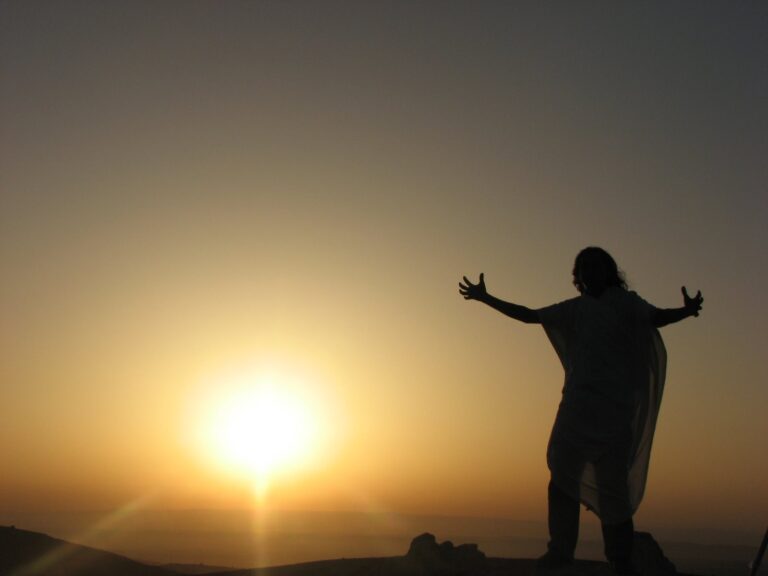
পথ চলতে চলতে জীবনের নানান অভিজ্ঞতা আমাকে যেই প্যারালাল ওয়ার্ল্ড এর হাতছানি দিয়ে গেছে তাঁর সাথে সাক্ষাতের আকুতি, তাড়না আমার পিছু ছাড়েনি কখনো। আমি আমি দেখেছি আমার পথ আমাকে পরিচালিত করছে । আমার সচেতন মন, যুক্তি এবং দৃশ্যমান বাস্তবতার সমান্তরালে আরেক অদৃশ্য চালিকা শক্তি আমকে ঘিরে থাকে যার অস্থিত্ব আমি প্রবল ভাবে অনুভব করি। এই অনুভব এখনো আমাকে তাড়া করে, এই সমান্তরাল পরিচালক যেন গানের সেই পাগলা ঘোড়া, আমি তাঁর পিঠে চড়েছি কখন জানি না, কিন্তু তাঁকে নিয়ন্ত্রন করার জন্যে আমার চেষ্টার শেষ নেই, কিন্তু মাঝে মাঝে তাঁর দেখা পাই বেশিরভাগ সময় পাই না।
ছবিটির আমি উপরের ধারনা প্রকাশের চেষ্টা ও সমসাময়িক রাজনৈতিক পরিস্থিতিতে নিজের অস্থিত্বের সংকট কে তুলে ধরতে চেষ্টা করেছিলাম ২০০৭ সালে বগুড়ার নিজেরা করি প্রশিক্ষন কেন্দ্রের মিলনায়তনে, চলছিল বৃত্ত আর্ট ট্রাস্টের আন্তর্জাতিক আর্ট ওয়ার্কশপ।

Don\’t lose sight of your path, why are you running after something else?

I remember the time I was on my way to study art at Chittagong University. I can\’t recall much about that experience now, as my memory is not that good. But some events are unforgettable. I remember the day I returned home, sat in the pond at 9 pm, ate, rested for a while, studying for a few hours, prayed and meditated, and then fell asleep. That night, I had a dream that Sheikh Hasina, the Prime Minister, was coming to Chittagong, and there was a big meeting with Bangabandhu\’s picture on every road. The dream stayed with me, and the next morning, as I boarded the bus to the university, I saw people whistling and heard that someone had attacked her fleet on the occasion of her arrival, causing a fight in the city.

One day, after my morning tuition, I was on the bus to the university, and it stopped at the 15th Boat station to pick up passengers. While looking out of the window, I noticed a man lying in a clean white cloth on the pavement in front of a tea shop. In the meantime, I heard someone requesting the bus conductor to take a sick man, who was from the Meeresarai area, down to Bishwa Road so that the people of his neighborhood could help him go home. However, the bus refused to check his condition. As I was going the same way, I decided to help the sick man, got off the bus, and took him to a doctor\’s clinic in Fakir Hat with the help of a rickshaw puller. The doctor told me that he had had a stroke and had to be taken to Chittagong Medical College Hospital immediately.

With only 45 takas in my pocket, I found about 240 takas in the sick man\’s pocket and arranged for a baby taxi to take him to the hospital along with the rickshaw puller. However, the emergency department did not want to admit him. After much persuasion, he finally got admitted. I had to inform his relatives, so I got the name and address of his younger brother, who was the shop owner of Bariyar Hut. With the money I had, I could only go there, but I had no money for lunch. I decided to stay with the sick man instead of going to class.

Finally, I reached Bariyar Hut and gave the news to the man\’s brother. However, he behaved very badly and accused me of lying to trap him and take him to Chittagong with this news. I explained the situation to the people around him, but his brother remained angry. All this commotion ended by 3 pm, and I was left hungry with only 9 takas in my pocket.

when everything had settled down, it was already 3 pm and my stomach was growling with hunger. I searched my pockets and found 9 takas, but I wondered how I could make it back to Patenga without eating anything. The throbbing pain in my head wasn\’t helping either. As I walked into the restaurant, I saw a bowl of rice waiting for me. I quickly washed my hands, sat at the table, and was handed a plate of rice along with a bowl of mashed potatoes and another bowl of dal. The person serving asked if I wanted curry, but I was more concerned about how much the rice and potato filling would cost me. It turned out to be seven takas, which I could afford, so I told him I didn\’t need anything else. I quickly gobbled up the smashed potato and dal, paid the bill, and left. I had only 2 Taka in my pocket, but I needed to pay 2 takes to ride the local bus to Sadarmar Dighi from Bariar Hut. I arrived at my uncle\’s house later on with an empty pocket, and he was surprised to see me. I explained the incident to him, and he insisted that I stay the night. However, I had to decline since my parents would worry about me. I had originally planned to go to the university but ended up at my uncle\’s house due to the current situation. Before I left, my mami gave me 100 takes, and I quickly departed. When I returned home from Patenga, I got down to Suchoyan in Kathgarh and arrived home at exactly 9 o\’clock. No one at home knew anything about my trip. The next day, I went to Battali station and saw that my friends were tense about yesterday\’s incident. They told me that the train was ambushed by the armed cadres of the Shatra Seebir. They fired at the train, and many people could not reach the university that day. I didn\’t reveal what I did all day yesterday, but I went to jarul Tola in front of the Fine Arts department and gave three tumbles on the green grass, surprising my classmates.

Throughout my life, I\’ve had various experiences that have shown me a parallel world that I am always curious to explore. There\’s an invisible driving force that surrounds me and sometimes makes me feel like I\’m riding a crazy horse. This feeling still haunts me, and I always try to control it, but most of the time, I can\’t.

I expressed these ideas in a film I made to highlight the crisis of self-existence in the contemporary political situation. In 2007, the Britto Art Trust\’s international art workshop was held at the Do-It-Yourself Training Center auditorium in Bogra.

Let Me Know the Story Behind the History


Concept:
The art installation and performance are a response to the artist\’s experience during their residency at the Uijae Artist Residency in Gwangju, South Korea. During their stay, the artist visited a historic building that was significant in the country\’s democratic uprising of May 18, 1980. This experience led the artist to reflect on the complexity of history and the subjective nature of its interpretation.

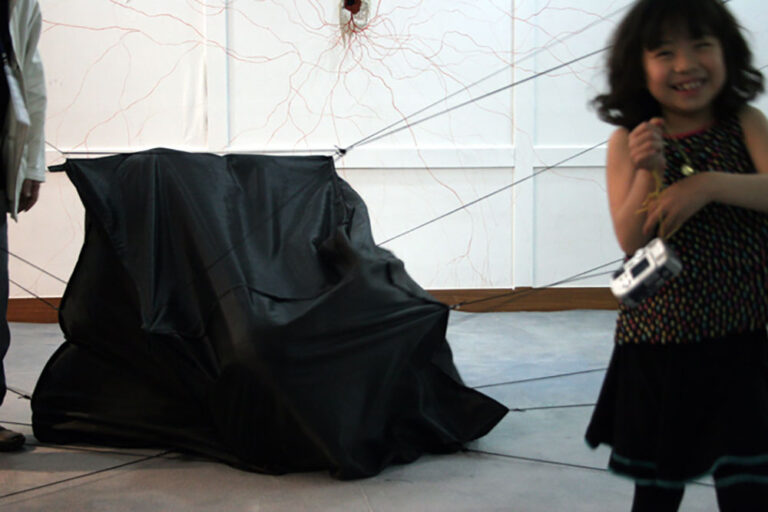
The installation consists of a network of red lines resembling the blood vessels of the human body, spreading out around bullet holes found in the designated rooms of the historic building. The lines represent the interconnectedness of people and the shared experiences of pain and sacrifice. The documentary on May 18 is projected on another wall of the room, highlighting the significance of the location and the event.

Performance:
The performance lasts for 30-45 minutes and takes place in a black cloth box-like form placed in the middle of the exhibition room. The performance is set to the rhythm of the patriotic song of May 18, emphasizing the emotional and national significance of the event. The artist changes the forms within the box, creating a visual representation of the transformative nature of history.

Explanation:
\”Let Me Know the History Behind the Story\” is an exploration of the subjective nature of history and the interconnectedness of people across time and place. Through the use of red lines, bullet holes, and performance, the artist invites the audience to reflect on the complexity of history and the human experiences that shape it. The performance emphasizes the emotional impact of historical events, reminding us that we are all connected by our shared humanity.

Cross-Cultural Collaborative Performance

\”Cross-Cultural Collaborative Performance\” is a collaborative and participatory performance art piece created by a group of diverse artists during a three-month residency at the Uijei Art Museum in Gwangju, South Korea. The performance took place on May 18, 2007, at the beginning of the open studio event, and was attended by a large audience, including the mayor of Gwangju, administrative officials, and officials from the South Korean Ministry of Culture.

During the residency program, the artists engaged in extensive discussions on various art, life, cultural, and political issues, exchanging opinions and debates. This collaborative performance was a result of one such discussion, where Thai artist Sorachai Ekpalakorn, Korean artist Gino Park, Abu Naser Robii, and the main curator and director of the residency, Kyong Paik, talked about the cultural experience of their respective countries, the relationship between culture with political and historical issues, religion, and the connection of human nature and natural environment with spirituality, among other topics.

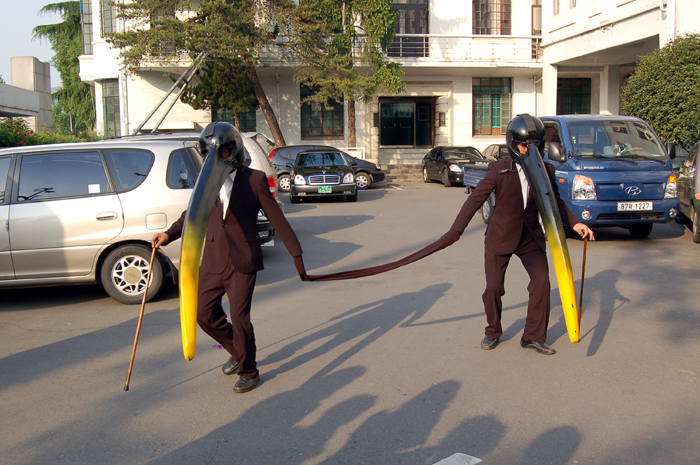
The performance involves the creation of symbolic figures and costumes that represent the essence of the artists\’ discussion. The Thai artist creates a fish head mask, which he wears while walking blindly with a cane in one hand, highlighting the limitations of human consciousness and our entrapment in ethics and religion. The Korean artists, on the other hand, create two hummingbird heads, wearing a whimsical outfit made by combining one sleeve of black and white Korean government officers\’ clothing.

Together, the artists perform a path towards Gwangju Square, making strange noises and creating a metaphor of the handsome and big-lipped Korean politician as a symbol of Korean political culture, expressing the ironic numbness of various steps of politics. Sorachai\’s fish mask and trauma to his head also critique the social and political leadership, creating a sense of lost consciousness.

\”Cross-Cultural Collaborative Performance\” is a unique experience that showcases the power of cultural exchange and collaboration among artists from different countries and backgrounds. It highlights the importance of discussions on various issues, leading to the creation of thought-provoking art that critiques social and political issues.

\"\"

UIJAE Art Studio International Residency -2007

During my artist residency experience in Mudungsun Mountain, Gungju city, South Korea, I had the opportunity to explore the connection between prayer, mountain climbing, and happiness. After a harsh winter, I was struck by the beauty of the new leaves and colorful wildflowers that had emerged and felt extremely happy after each visit. However, this also led me to question why I and many others enjoy climbing mountains. I observed that people of all ages visit mountains in their free time and that many Buddhist temples are situated on mountaintops.

Drawing from my own experiences with Muslim prayer systems and scientific meditation in university, I researched various established methods of meditation, the process of sexual orgasm, eastern and western classical music, traditional Korean music, and other phenomena of life that can make us happy. I found similarities in the physical and mental processes that lead to happiness and wondered if the physical act of performing an action is important to make us happy, how our mind gets involved with the process, and whether it needs to be distant from the body to feel happiness.

I visited the mountain and temple every day and was surprised by how the nature and process of climbing combined with me, leading me to experience some unusual moments that are not possible on plain land. I asked some artist friends to help me develop my project, and together we explored the effects of mountain climbing on the mind and body. Through our visits, we observed that the physical tiredness of climbing made a distance between the body and mind, while the expanding horizon line had an effect on our mind to open it up.

As we climbed the mountain with our friends, we found that our relationships changed after each visit and that we gained a deeper understanding of ourselves and our relationships. We wondered if the physical act of climbing and the consciousness of stepping helped fulfill the process of happiness. This exploration culminated in a prayer performance on Mudungsun Mountain, which we documented and presented in a gallery space to share our conceptual process with others.

Overall, my experience climbing Mudungsun Mountain led me to question the link between prayer and mountains, explore the mechanisms of climbing mountains, and question what makes us happy. Through this exploration, I gained a deeper understanding of the connections between physical and spiritual happiness, and the transformative experience that can result from the act of climbing a mountain.

\"\"

During my three-month residency at Mudung Mountain Studio, I embarked on a new artistic project titled \”Searching for the missed mystery of Life and Happiness\”. The project aims to visually explore the relationship between nature, spirituality, and happiness, and understand the mechanisms that encourage people to be drawn to supernatural beings and phenomena.

To accomplish this, I plan to use a variety of creative visual practices, including live performance, video, photography, drawing, music, and painting with simplified installations. My focus will be on my thoughts and inner feelings about interpersonal and socio-life, as well as the crossroads of artistic practice, personal expression, experimentation, and risk points.

The project\’s catalyst note is a passage by Khalil Gibran about prayer, which has guided my exploration of the connection between prayer, nature, and happiness. My goal is to create a conceptual world that will serve a new epoch and to present my work in a way that is easy and communicative to non-artist audiences.

Through this project, I hope to provoke reflection and exchanges around the process of creation, form a notion of sculpture as a live presence, and occupy space for a fragment of time. It will be an immersive experience that takes the audience on a journey through the unknown, encouraging them to approach sculpture through installation and performance, feel sensations, and listen to movement.

Ultimately, the primary objective of this project is to uncover the mysteries of life and happiness and present them through the visual arts.

Leaf and Life


\"\"

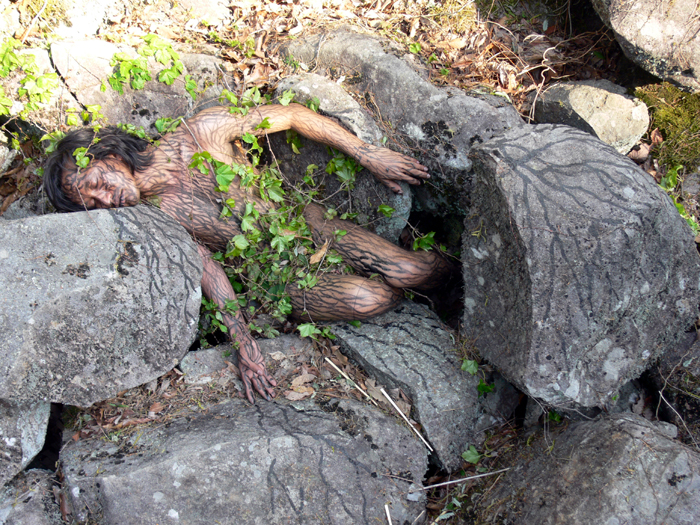
\”Leaf and Life\” was a performance and installation project showcased during the Open Studio Day exhibition of Santua Art Foundation\’s World Environment Day 2005 event, held at the bank of Karnaphuli River in Patenga. The project aimed to explore the spontaneous creative process of nature, seasons, organic objects, and human feelings through the life cycle of a leaf. The project was designed to be an immersive experience, allowing the audience to interact with nature and art simultaneously.

\"\"

The project was staged in a natural environment, allowing the audience to witness the interaction between nature and art. The installations were designed to represent different stages of the leaf\’s life cycle, with the first installation featuring fresh, green leaves symbolizing the energy and hope of spring. The audience was encouraged to touch and interact with the leaves to evoke a sense of connection with nature.

\"\"

The installations progressed, and the leaves gradually turned yellow and brown, symbolizing the natural process of aging and decay. The audience witnessed the leaves falling from the trees, a reminder of the impermanence of life.

The final installation featured dry, dead leaves, representing the negative aspects of life, such as loss and mortality. However, even in death, the leaves were transformed into something new, as they decomposed and nourished the soil, enabling new life to grow.

Throughout the project, the audience was invited to reflect on their own personal experiences and knowledge about life, as they witnessed the transformation of the leaves. The project aimed to evoke a sense of awe and wonder at the beauty and complexity of nature, while also reminding us of the importance of living in the present moment and cherishing the preciousness of life.

Overall, \”Leaf and Life\” was a multi-sensory and immersive art project that brought together nature, seasons, organic objects, and human feelings, creating a unique and thought-provoking experience for the audience. The project successfully demonstrated the power of art in connecting people with nature and highlighting the importance of environmental conservation.

\"\"

Performance venue: Porapara Space for Artist

December 2004, Duration: 30 min.

Water is everywhere but where is Drinking water?

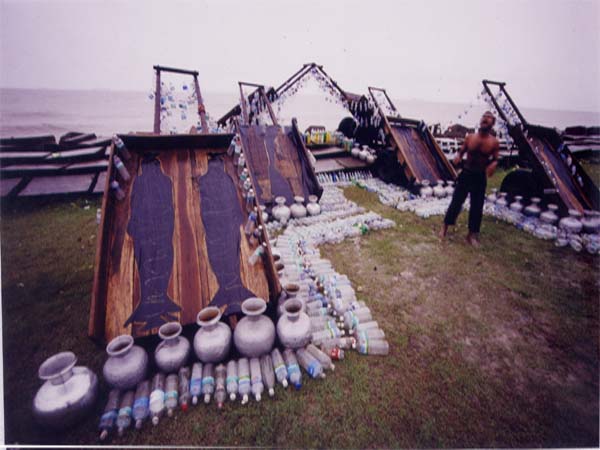
As an artist, I have always been interested in creating art that brings about social change and awareness. On June 5th, 2005, I organized a solo installation art show at Patenga beach in support of the World Environment Day activities of Porapara Space for Artists.

The installation aimed to highlight the freshwater crisis and the dire situation of water pollution in the area. Through a series of social practice art activities, I engaged with the local community to create awareness and stimulate discussion on these pressing issues.

My approach involved leaving empty water jugs in some houses in the local market, creating curiosity, and engaging people in a discussion about fresh water and water pollution. The response was overwhelming, and many local people participated in the activity by offering their help to transport the materials to Patenga beach, which was around 5 miles away.

With the help of the local community, I collected almost all the materials for my installation and created a live performance piece that was witnessed by tourists, locals, and fellow artists. Despite the hostile weather and heavy rain, the performance was a success, and many members of our community became a family.

Through this social practice art activity, I aimed to create a space for dialogue and awareness about the environment and the impact of human activity on the planet. By engaging with the local community and involving them in the activity, I hoped to create a sense of shared responsibility and encourage positive action toward a better future for performance.

in this event local cultural Organization \”Amra Palash\” Drama artists Sohidul Islam Mithu and Ekramuk Hauque participate in the performance action. Mazharul Alam Titumir, Anwar Jamal, Harun Mehedi, Hanif Uddin Talikdar, Musa Alam Masud, and many other local friends help to make the event successful.

City Bird

As an artist participating at the beginning of the Porapara Space for Artists, I had the privilege of taking part in an art workshop led by the talented artist Mahbubur Rahman. The workshop was titled \”Animated Sculpture\” and aimed to explore the possibility of creating a visual language by combining mechanical ideas with sculptural forms.

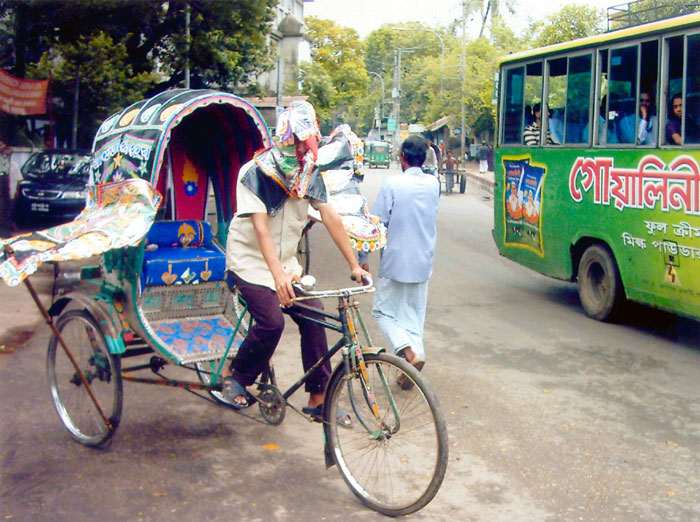
During the workshop, I connected wings to a rickshaw in a way that allowed it to move like a bird flapping its wings when the rickshaw was in motion. I also fashioned a hat for myself out of the rickshaw hood. In a surreal live performance, I attempted to drive the rickshaw down the street in front of Alliance Frances in Chittagong while an exhibition of our artwork was on display inside the venue.

Through this work, I sought to express the hope of escaping the traffic congestion that plagues our cities. The rickshaw\’s transformation into a bird serves as a metaphor for this desire for freedom. The idea of an animated sculptor was also reflected in the attachment of wings to the installation, which added an element of movement and life to the work.

To make this performance work accessible to a wider audience, an installation of the piece is now on display in the gallery. Viewers can witness this surreal and thought-provoking work on a TV monitor, which captures the energy and dynamism of the original live performance.

\"\"

Conflict of mind

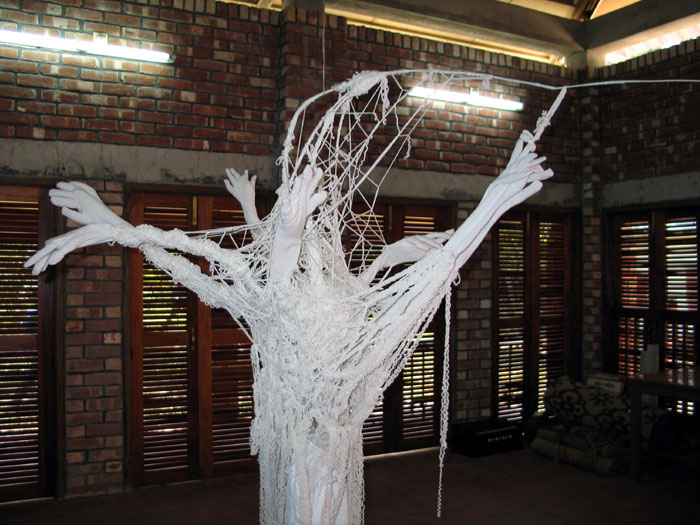
Explore the conflicts that shape our world, including those between existence and non-existence, large and small, and power and inability. Recently, I participated in a 10-day art workshop in a secluded ashram, where we explored the integration of the body, usable objects, time, and space to express human existence and feelings. At the workshop, I created a weaving of a neuron cell to represent the unit of invention and discovery within our minds, revealing tensions between speed and status and new interpretations. My art seeks to embody conflicts and tensions in new and meaningful ways.

\"\"

I see the world as a place of constant conflict and balance. From the tension between existence and non-existence to the struggle between power and inability, our world is built on a delicate equilibrium of opposing forces. At times, this balance can collapse and turn everything upside down. But in this game of destruction and creation, conflict is essential for growth and progress.

Recently, I participated in a 10-day art workshop held in the peaceful Jagatpur Ashram in Raujan, Chittagong Along with other young artists, we explored the idea of integrating the body and its objects, time, and space to express human existence and feelings. We questioned whether movement could become sculpture, and how we could convey our emotions in a spontaneous yet planned manner.

During this workshop, I was going through a turbulent time in my personal life. I had just finished my studies in fine arts and started working, with an uncertain future ahead of me. But amidst all these doubts and fears, I found solace in the workshop\’s exploration of a new way of visual art.

\"\"

At the entrance of the ashram, I noticed an electricity tower and my thoughts turned to the struggle for survival and the non-existence of self. With the idea that all the inventions and discoveries of the world are inside a tiny neuron cell that allows us to think, we created our own research and thoughts on this site.

We wove together a neuron-like object using bamboo and electric poles, representing the game of neurons at the root of all creation. In the center of this creation were me, a traveler with an aimless destination, a desire to go and to be, and a static being in the multi-directional tension of history and tradition. The conflict between speed and status was expressed through bodily actions, while objects and forms were transformed to create new interpretations in response to the present viewer.

This movement was later repeated in Dhaka\’s Alliance Francis Gallery, where we shared our experience with the local audience. The workshop director was so moved by the weaving process that he incorporated it into his own movement during the event. It was a memorable evening and the beginning of a new journey for all of us.

As an artist, I believe that our world is built and sustained by balancing countless conflicts – between existence and non-existence, large and small, power and inability. These conflicts drive the game of destruction and creation that underlies all of our existence. Recently, I had the opportunity to participate in a 10-day residential art workshop with French artist Ayona Coaznai and Bangladeshi artist Mahbubur Rahman at Jagatpur Ashram in Rawjan, Chittagong. The workshop aimed to explore the integration of the body and usable objects, time, and space to express human bodily existence and emotions as an extension of the sculptural or monumental images of its.

As a recent fine arts graduate and new artist, I felt both lucky and apprehensive about being part of this research. Amidst personal turbulence and uncertainty, I engaged in soul-searching discussions with fellow artists, exploring new ways to express visual art. At the entrance to Jagatpur Ashram, I was struck by the electricity tower and its presence as a symbol of survival and struggle.

The workshop\’s originality lay in its creation of a site for research that drew inspiration from the idea that all the world\’s inventions and discoveries are contained within the unit of a single neuron cell that enables us to think. I explored the conflicts that lie at the root of all creation, seeking to embody them through certain movements in specific times and spaces.

To this end, I wove a neuron into a string of jute, with each node representing a single neuron. The transformed form of the neuron cell in my head became the central object, with its different ends covered with different corners of the huge electric poles, connected by an invisible thread. The weaving was inspired by cultural and traditional bamboo weaving, and it represented me – a traveler of an aimless destination, a desire to go, a desire to be, and a static being in the multi-directional tension of history and tradition.

My bodily actions expressed the conflict between speed and status, changing familiar forms and creating new interpretations in response to the present audience. This was the beginning of a different journey that inspired the workshop director Mahbubur Rahaman to make a movement to strengthen the idea by himself with the help of my weaving at the same event in Dhaka\’s Alliance Francis Gallery. The evening was memorable, and I look forward to continuing to explore new ways to express the conflicts that drive our world.